
From Spatial Structures to Human Learning - psyedu- دانشکده روانشناسی و علوم تربیتی
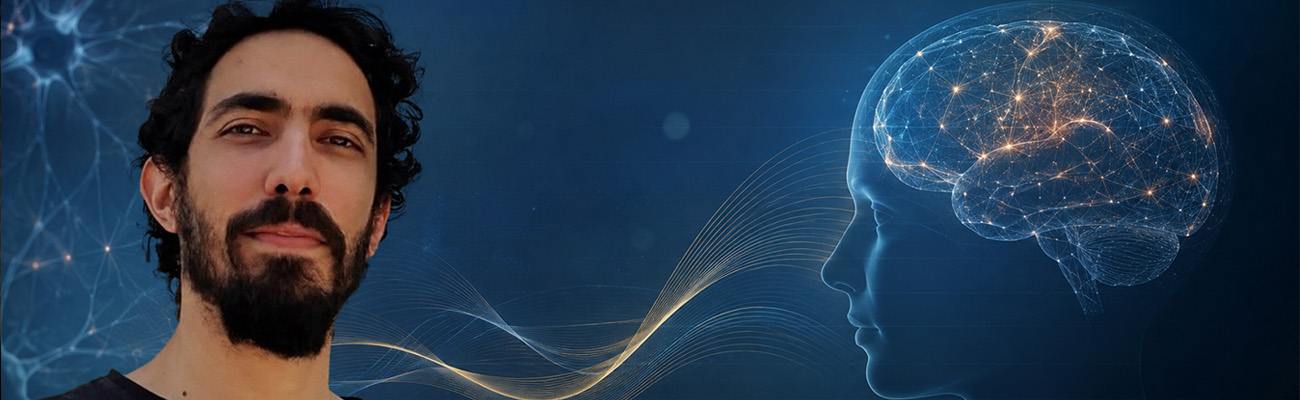
Dr. Amin Hashemi, who holds a PhD in Cognitive Science from the University of Barcelona (Spain) and is currently a postdoctoral researcher at the University of Tehran’s Faculty of Psychology and Education, discussed his research trajectory in the field of learning with the University of Tehran’s Office of Research and Technology. In doing so, he emphasized the significance of spatial structures and mental representations within the human learning process.
Dr. Hashemi, who is conducting his postdoctoral research through the "Connect" program, identified the core focus of his work as addressing one of the fundamental questions in cognitive science: "How do humans learn?" He explained that his research approach—rooted in years of study during his doctoral program—centers on the role of spatial structures in thinking, reasoning, and learning.
Pointing to recent findings in cognitive science, Dr. Hashemi noted that a substantial portion of complex human cognition and mental faculties appears to be built upon modules and capabilities that extend beyond language, playing a role in perceptual and non-linguistic domains as well. One such capability involves the mechanisms associated with spatial orientation. Recent research indicates that humans utilize some of these very mechanisms to construct mental maps, which are then employed during the processes of thinking and learning.
The postdoctoral researcher added:
"The central question driving this research is: Do human mental maps possess a specific structure, and how do these structures influence the learning process? In other words, what role does spatial structure play in the mental representation of what a human learns, and how might it shape the quality and trajectory of that learning?" Describing part of his empirical research, Hashemi stated: "To investigate this issue, experiments were conducted at the University of Tehran in which students—divided into various groups and placed under different conditions—were taught a relatively simple concept within the field of neural networks, specifically involving structures that incorporate feedback. Preliminary results from this research indicate that the structure chosen by an instructor to present a concept can serve as the foundation for how that concept is mentally represented and learned by the student."
He continued: "For instance, if a concept is presented to a learner using a linear structure, the learner may represent and acquire that concept based on that very linear framework; conversely, if the same concept is presented using a circular structure, that circular framework becomes the basis for learning. Furthermore, in situations where no clear structure is provided for a given topic, the learner is either compelled to construct a mental framework themselves, or the learning process may become significantly more challenging for them."
According to him, these findings suggest that the spatial structure of a mental representation—as well as the mode in which a concept is presented (whether visually, in writing, or even through body language)—can play a fundamental role in the learning process. Consequently, a key focus of this line of research is examining the role of spatial organization in the formation of mental representations and its subsequent impact on learning.
Highlighting the potential implications of these studies for educational systems, the University of Tehran researcher noted:
"A significant portion of educational theories and methodologies worldwide has traditionally emphasized the role of language in learning. However, recent findings indicate that human learning is not exclusively a linguistic process; perceptual and non-linguistic abilities can also play a crucial role." From this perspective, one might ask to what extent images, spatial structures, the manner in which concepts are presented, and even a teacher’s body language can exert a positive or negative influence on the quality of learning.
Regarding the innovative nature of this line of research, he noted that studies concerning the role of spatial structures in mental representation and learning constitute a relatively new and under-explored field. In recent years, as evidence has grown regarding the role of spatial mechanisms in human thought and knowledge, a fresh perspective on cognitive processes has emerged. This view suggests that certain abilities—previously thought to be limited primarily to spatial orientation and perception—may also play a role in the formation of abstract thought, reasoning, and learning.
Pointing to the connection between these studies, artificial intelligence, and future technologies, Hashemi added that research into the non-linguistic human capacities involved in thinking and learning could help clarify the distinctions between human cognitive mechanisms and current artificial intelligence systems. A significant portion of today’s prevalent AI models relies on the processing of language and linguistic data, whereas humans employ a much broader array of perceptual and non-linguistic abilities for thinking and learning.
He emphasized that examining these differences could raise significant questions regarding the degree of similarity between human learning mechanisms and those of artificial intelligence, thereby paving the way for new avenues of research. While addressing these questions necessitates extensive interdisciplinary inquiry—spanning fields such as cognitive science, psychology, neuroscience, and artificial intelligence—theoretical research in this area could serve as a foundation for the development of future intelligent technologies and systems. In conclusion, this postdoctoral researcher noted that continuing along this path requires long-term research. He stated: "Questions such as how humans learn, how they reason, and how they grasp abstract concepts are among the major, fundamental inquiries in cognitive science; answering them cannot be achieved through one or two studies or within a short timeframe."
He pointed out:
"Research in this field—rather than leading to a definitive, final solution to a problem—gradually reveals various components of the complex mechanisms underlying human learning. Therefore, maintaining a consistent line of research over many years is of great importance; for the interruption of such trajectories could..."
...contributing to the accumulation of knowledge and the attainment of a deeper understanding of human cognitive abilities.
Dr. Hashemi expressed hope that by continuing this line of research, he might make a contribution—however modest—to expanding scientific understanding of the mechanisms underlying human thought and learning. In the long term, this path could not only advance theories within the cognitive sciences but also pave the way for a re-evaluation of educational methods, while serving as an inspiration for future research in the fields of artificial intelligence and intelligent technologies.